
Latex vs. Oil-Based Paint for Signs: A San Jose Sign Shop Guide
The right paint system depends on where the sign will live, what it is made from, and how quickly it needs to be installed. Here is a practical sign-shop breakdown for San Jose and South Bay businesses.
Key takeaways
- Latex paint dries faster, has lower odor, and cleans up with water, which helps on tight storefront and tenant-improvement timelines.
- Oil-based paint can still be useful for select detail work and prepared metal surfaces, but it adds dry-time, odor, and cleanup constraints.
- For San Jose and South Bay signs, substrate prep, primer choice, sun exposure, and maintenance access matter as much as the paint label.
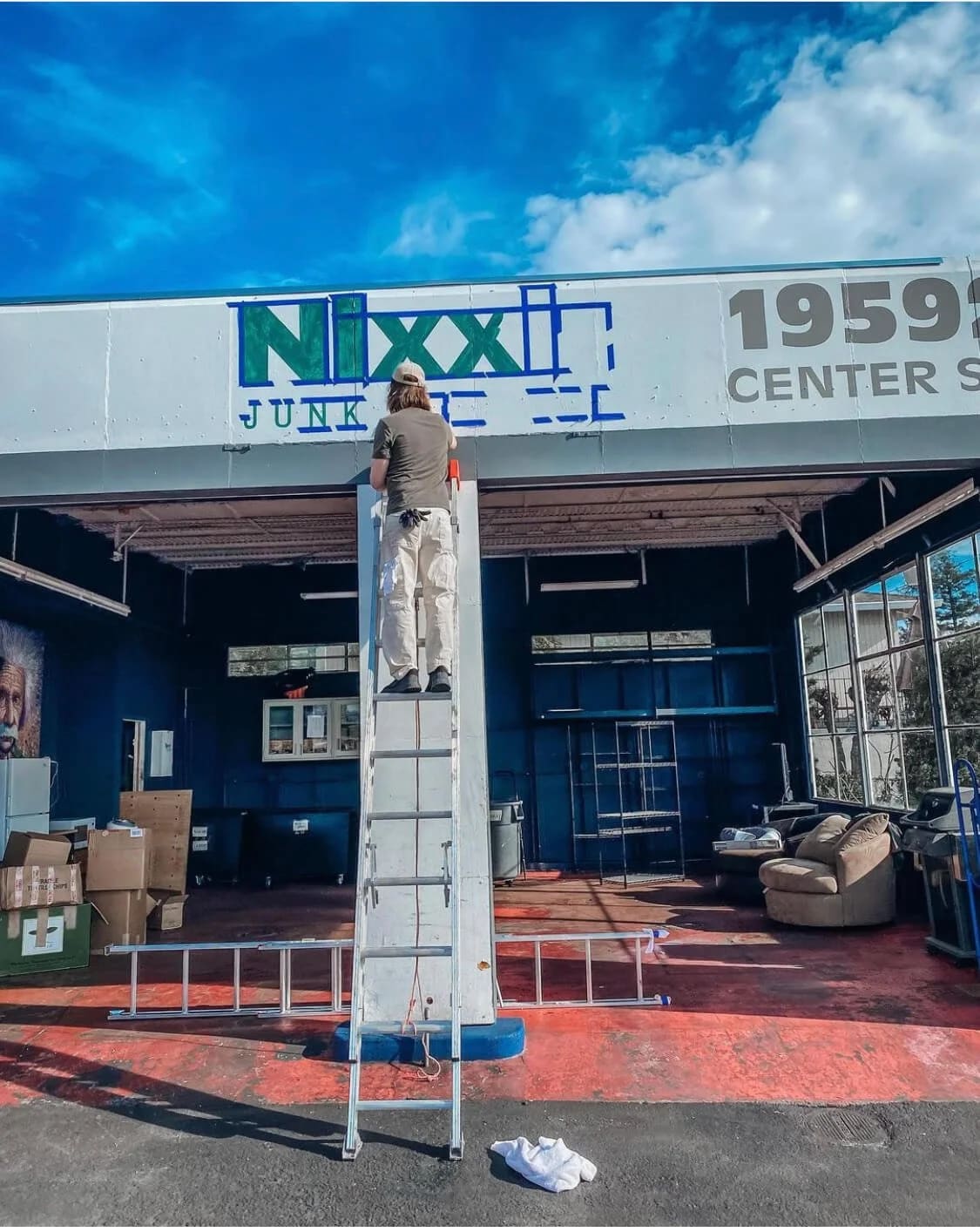
Choosing between latex and oil-based paint is still a real sign-shop decision, even though many projects now default to water-based coatings. The best answer depends on the sign material, exposure, finish expectations, and how the sign will be installed or maintained after it leaves the shop.
For San Jose businesses, the question comes up on storefront signs, wall lettering, dimensional sign faces, metal panels, painted backgrounds, and small wayfinding signs. A cafe near downtown San Jose, a clinic in Palo Alto, and a retail tenant in Santa Clara may all need durable painted signage, but their surfaces and exposure can be very different.
What is the difference between latex and oil-based paint for signs?
Latex paint is water-based. It dries quickly, has lower odor than traditional solvent systems, and cleans up with soap and water. For sign work, the strongest modern versions are usually acrylic latex or waterborne acrylic systems, which are made to hold color and flex with normal weather movement.
Oil-based paint, often an alkyd coating, uses petroleum-derived solvents as carriers. It dries more slowly, gives off stronger fumes, and requires solvent cleanup. Sign painters have long valued oil-based paint for its smooth flow, hard finish, and grip on certain prepared surfaces, but those benefits come with practical limits on commercial jobs.
Why do San Jose sign projects often favor latex paint?
Latex has become the practical default for many exterior and interior sign applications around San Jose, Santa Clara, Sunnyvale, Mountain View, Cupertino, Milpitas, and Fremont. It works well for the way many local signs are produced: fast-moving projects, tenant improvements, exterior storefront refreshes, and signs that need to be handled, delivered, or installed without waiting days between coats.
- Faster turnaround. Quick dry times can allow multiple coats in a day, which helps when a storefront opening, lease deadline, or installation window is approaching.
- Lower odor on active properties. Water-based coatings are easier to use around offices, restaurants, medical suites, schools, and occupied retail centers.
- Simpler environmental compliance. The Bay Area Air Quality Management District (BAAQMD) regulates volatile organic compounds in architectural coatings. Latex paints generally fit more easily within local VOC standards than older solvent-heavy products.
- Better flexibility. Water-based acrylic coatings can expand and contract with temperature swings instead of becoming brittle, which matters on exterior signs facing full afternoon sun.
- Color retention. Modern latex paints tend to hold their color well under UV exposure, while many oil-based coatings can yellow or chalk as they age.
That is especially relevant in the South Bay, where a sign can sit in strong sun for much of the year. According to paint industry guidance, oil-based paints tend to yellow and become brittle over time, while water-based coatings often retain their appearance better in exposed conditions.
When does oil-based paint still make sense?
Oil-based paint has not disappeared from professional sign work. It is just used more selectively. A sign shop may still consider it for controlled applications where the dry time, odor, and cleanup process will not disrupt the property or the production schedule.
- Protected detail work. Oil-based coatings can produce a smooth, self-leveling finish on trim, small painted features, and decorative elements.
- Prepared metal in controlled conditions. Some oil-based systems still bond well to properly cleaned and primed metal, though modern waterborne primers have narrowed the gap.
- High-touch interior pieces. The harder finish may help on certain indoor signs, counters, displays, or painted components that are handled often.
- Specific matching requirements. In some restoration or repaint situations, the existing coating system may influence what can be applied next.
The trade-offs are significant: slower curing, stronger odor, solvent-based cleanup, and a more careful product-selection process. For a busy commercial corridor, occupied office building, or multi-tenant retail center, those constraints can matter as much as the finish itself.
How does South Bay climate affect paint selection?
San Jose and nearby South Bay cities do not all behave the same from a sign durability standpoint. A sign near a shaded pedestrian corridor has different needs than a monument sign facing a wide parking lot, and a painted wall graphic inside a business has different risks than an exterior panel on a sun-facing elevation.
Sunny exterior locations in San Jose, Santa Clara, and Fremont put more stress on color retention and surface temperature. Dark colors on metal or composite panels can heat up quickly, so flexibility and primer compatibility matter.
Shaded or landscaped properties in places like Palo Alto, Mountain View, and Cupertino may see more irrigation overspray, tree debris, and mildew risk. In those conditions, cleanability and moisture resistance become part of the paint decision.
Fog-prone or bayside locations can add damp mornings and salt-air exposure. If your business has multiple locations, the same painted sign specification may not perform identically at every site.
That is why a good sign recommendation should include exposure, mounting height, maintenance access, and the base material, not just the paint brand.
What preparation steps apply to both paint types?
Most paint failures are preparation failures. Whether the finish coat is latex or oil-based, the sign surface needs to be ready before paint goes on.
- Clean the surface thoroughly. Remove dust, grease, chalking, adhesive residue, and loose material. Paint cannot bond to contamination.
- Identify the substrate. Wood, acrylic, PVC, aluminum, steel, and aluminum composite panels all need different prep and primer choices.
- Use the right primer. The primer has to match both the material and the finish coat. This is especially important on metal, plastic, and previously painted signs.
- Watch application conditions. Avoid painting in direct hot sun, heavy moisture, or conditions outside the coating manufacturer's recommended range.
- Respect recoat and cure times. A surface can feel dry before it is ready for masking, transport, installation, or weather exposure.
- Protect high-exposure work when needed. UV-resistant clear coats or specialty finishes can help on signs that receive constant sun or frequent cleaning.
For aluminum signs and other metal substrates, surface preparation is the difference between a coating that lasts and one that starts peeling at edges, fastener points, or scratches. The paint type matters, but the system matters more.
What about rules, landlords, and occupied job sites?
Paint selection is not only a shop-floor question. Around San Jose and the Bay Area, commercial sign work often happens on active properties with property managers, landlords, neighboring tenants, and customers nearby. A coating with strong odor or long cure time can create scheduling problems even when it is technically suitable.
Air-quality rules also affect what products are available and appropriate. BAAQMD Regulation 8, Rule 3 sets VOC limits for many architectural coatings sold or applied in the district, and coating labels should be reviewed before a product is selected for a commercial sign project.
- Occupied interiors usually favor lower-odor systems and clean work areas.
- Retail centers may require coordination around business hours, pedestrian access, and property rules.
- Exterior repainting may need attention to masking, overspray control, weather, and drying time before the sign is exposed.
- Multi-location businesses should document the coating system so future touch-ups match across sites.
This is one reason latex and waterborne acrylic systems are common in commercial sign work. They are usually easier to schedule, easier to clean up, and easier to maintain on real properties.
How do costs compare?
The price of the paint can be a small part of the real cost. Labor, dry time, surface prep, access, and future maintenance often matter more than the gallon price.
- Application time. Latex can reduce downtime because it dries faster between coats.
- Cleanup and disposal. Water cleanup is simpler than solvent handling on most jobs.
- Access costs. If a sign requires ladders, lifts, or after-hours work, a slower coating system can raise labor cost.
- Maintenance cycles. A coating that holds color and resists cracking can reduce repainting and touch-up work later.
- Compatibility mistakes. The wrong primer or topcoat can make a cheap paint choice expensive if the sign has to be stripped and redone.
For most commercial sign projects, latex offers the better total value because it fits common production timelines and maintenance expectations. Oil-based paint can still be worth considering when the application genuinely benefits from it.
Making the right choice for your sign project
Choose latex paint when:
- You need a faster production or installation schedule
- The sign is on an occupied commercial property
- The sign will face sun, rain, and normal exterior exposure
- Lower odor and easier cleanup are priorities
- Long-term color retention matters
- You want a practical system for future touch-ups
Consider oil-based paint when:
- The sign component is protected from weather and can cure undisturbed
- A very smooth self-leveling finish is important
- The substrate or existing coating system calls for it
- The job site can handle odor, dry time, and solvent cleanup
For most San Jose and South Bay outdoor sign projects, latex or waterborne acrylic paint is the practical choice. It handles common storefront conditions, works well with the right primers, and fits the pace of commercial signage better than traditional oil-based paint.
If you are unsure which approach fits your project, start with the basics: where the sign will be installed, what material it is made from, how visible it is, and how often it can be maintained. Start a project with us to talk through the right coating system, or visit our installation page to see how planning, access, and site conditions affect the final result.