Quick answer

Direct answer: A useful bar-sign package is a small information system, not a pile of matching rectangles. Permanent identity, menu content, happy-hour details, takeout directions, and event messages change at different speeds, so each should use a format suited to its location and update cycle.

Key takeaways

  • Start with what a guest must decide at each point in the room.
  • Photograph the space under the lighting used during service; low contrast that looks elegant on a monitor may disappear on site.
  • Separate stable branding from prices, hours, or specials that staff will need to revise.

Specs & options

Specs

Reading task
Brand identification, ordering, promotion, policy, or wayfinding
View conditions
Distance, angle, lighting, glare, obstructions, and dwell time
Content cycle
Permanent, seasonal, event-specific, or frequently revised
Placement
Wall, counter, tabletop, window, customer-supplied frame, or portable display
Site details
Usable dimensions, mounting surface, access, and property approvals supplied for the quote

Options

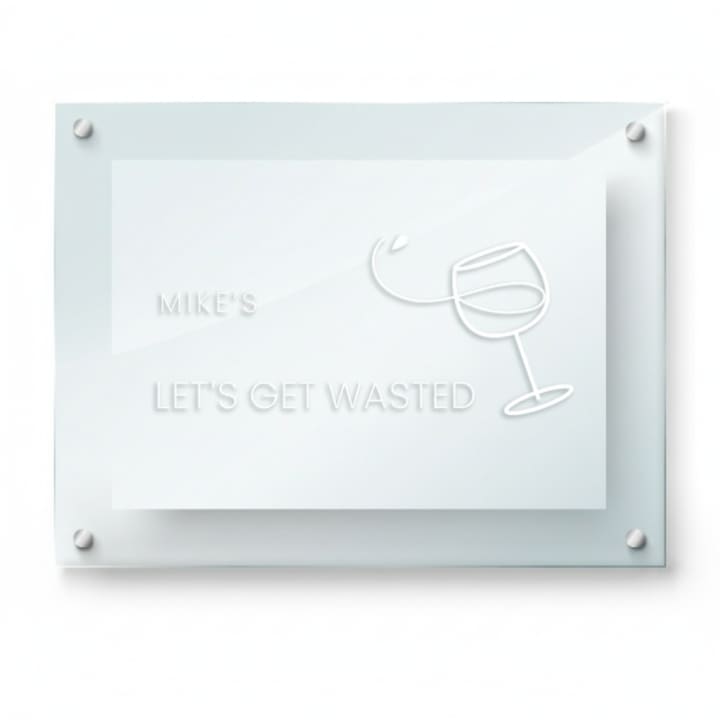
  • A rigid brand panel or nameplate for a fixed interior location
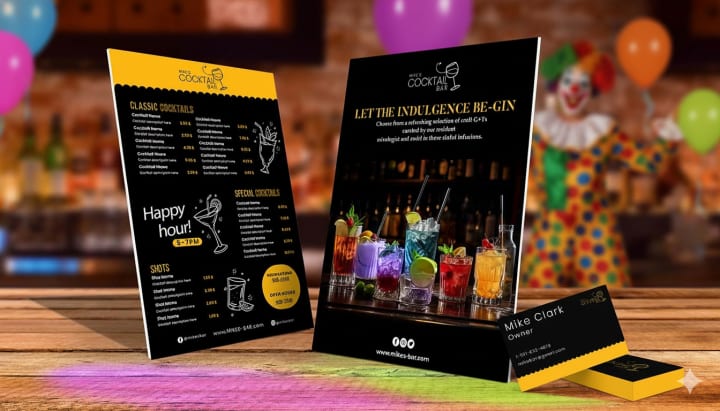
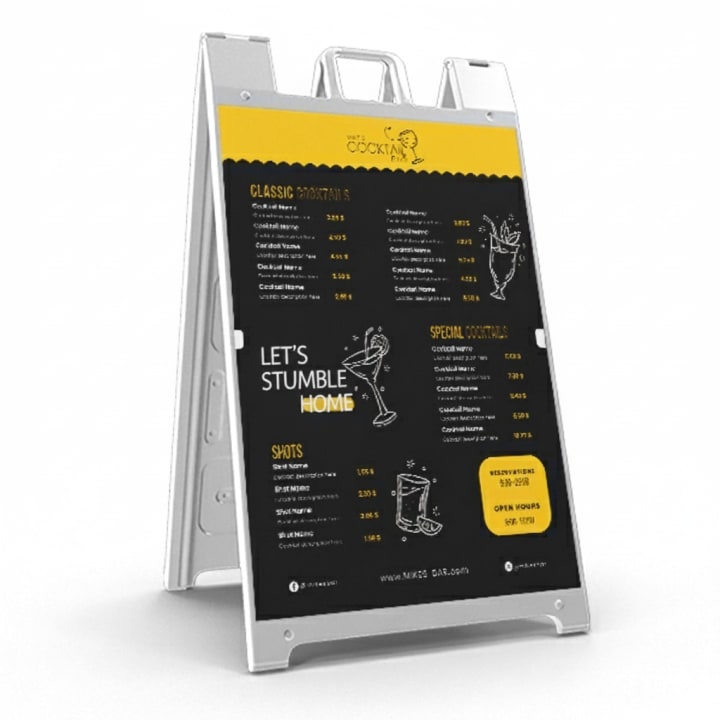
  • Menu panels sized around the number of items and typical reading distance
  • Small-format tabletop and counter pieces coordinated with larger signs
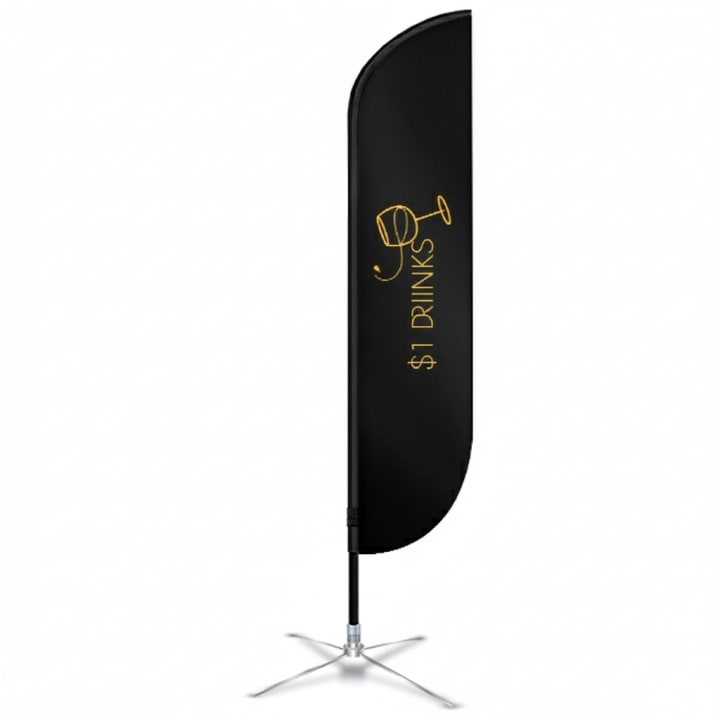
  • A-frame, banner, or flag concepts for approved exterior or event placement
  • A changeable area reserved for current offers, dates, or availability

Need help preparing files? See Artwork Setup.

Good fit for

  • A concise drink list above or behind the ordering point
  • Tabletop menus and counter cards that share one information hierarchy
  • Happy-hour or event messaging designed for planned updates
  • Takeout counter, patio, restroom, and private-event direction inside a venue
  • A home bar nameplate or display developed from supplied artwork

How it works

  1. 1) Inventory the messages

    List every sign by job and location, then separate permanent identity from menus, prices, specials, hours, and short-term events.

  2. 2) Document the room

    Send photos, usable dimensions, viewing distances, lighting notes, mounting surfaces, and the approved content for each placement.

  3. 3) Edit through proofing

    Review hierarchy, item groupings, spelling, prices, contrast, type size, dimensions, and update areas before approval.

  4. 4) Confirm the package

    The written scope records the chosen formats, materials, finishing, production timing, and any reviewed local installation work.

FAQ

Should a drink menu include every available item?

Not always. The menu’s size, viewing distance, and how long guests can read it set a practical limit. Decide which categories and details must be visible, then give them a hierarchy instead of shrinking everything equally.

How can specials change without replacing the main sign?

Keep changing content on its own panel, insert, card, or other replaceable area. The permanent sign can carry the venue identity while the temporary piece handles dates, offers, or availability.

What photos are useful for planning bar signage?

Send wide views of the room, the guest approach, the ordering point, and close views of each mounting surface. Include photos under normal service lighting and measurements of the usable area.

Can one design work for a wall menu and tabletop card?

They can share type, color, and organization, but they should not be identical reductions. Each format needs a layout that fits its reading distance, content amount, and orientation.

Can exterior bar signs be included?

They can be reviewed when the proposed placement, property approval, dimensions, exposure, mounting, and access are known. Any installation scope is confirmed separately for San Jose and the listed Silicon Valley service areas.