
Print Media Solutions for San Jose Small Business Launches: A Practical Signage and Print Guide
Physical marketing still matters when a new storefront, studio, office, or pop-up needs to be seen. Here is how San Jose businesses can prioritize signs, banners, cards, flyers, and window graphics before opening day.
Key takeaways
- A launch print kit should cover visibility, trust, wayfinding, and follow-up rather than just one promotional piece.
- Storefront signage, window decals, grand opening banners, and A-frame signs matter most for San Jose street-level businesses.
- Business cards, brochures, flyers, and direct mail help service businesses stay memorable after the first conversation.
- QR codes, dedicated offers, and landing pages make printed materials easier to track alongside digital campaigns.
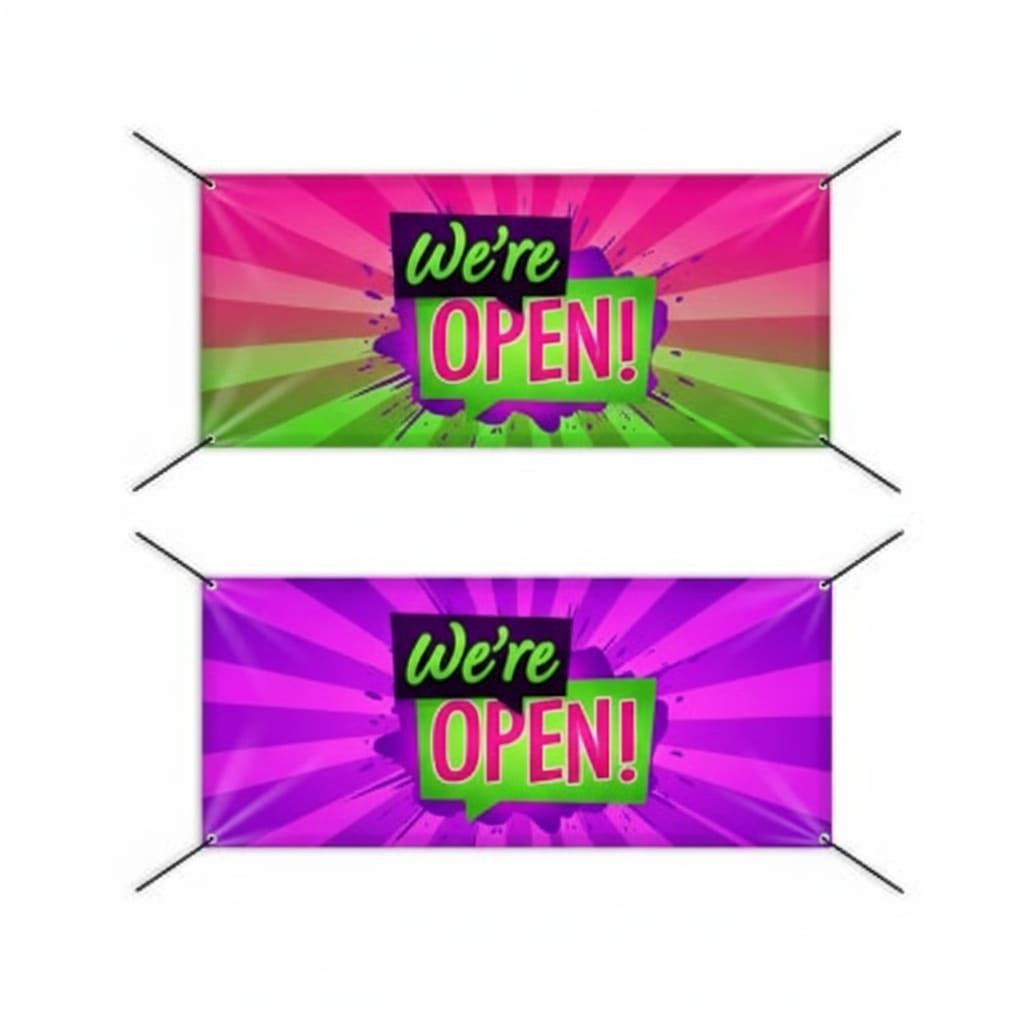
Opening a new business in San Jose means making yourself visible before customers know to search for you. Digital ads and social posts can help, but physical print materials still do a lot of the early work: a storefront sign tells people you are open, a banner creates launch energy, a business card keeps your name in a pocket, and a flyer gives someone enough detail to take the next step.
This guide covers the print and signage pieces that matter most during a small business launch, how to prioritize your budget, and how to plan around storefront conditions, installation timing, and local visibility in San Jose and nearby Bay Area cities.
Why does print marketing still matter in the digital age?
Physical materials create a kind of trust that is hard to get from a screen alone. Research from Newsworks shows that print ads drive 77% brand recall versus 46% for digital, which matters when a new business needs people to remember a name after one quick interaction.
Print also has a different rhythm from digital. A postcard can sit on a counter. A card can stay in a wallet. A brochure can be passed from one decision-maker to another. For restaurants, salons, clinics, fitness studios, contractors, and professional offices, that staying power is useful during the first few months after opening.
For brick-and-mortar businesses in the South Bay, custom window decals and professional signage provide 24/7 visibility. They work when someone is walking through Downtown San Jose, driving along The Alameda, meeting friends in Willow Glen, or passing a shopping center in North San Jose.
Print also bridges online discovery and in-person action. A sidewalk A-frame can turn a searcher into a visitor. A launch flyer can support a local partnership. A postcard can remind someone to book later. The best launch materials do not compete with digital marketing; they give it a physical presence.
Which print materials deliver the highest ROI for a business launch?
Not every printed piece deserves the same priority. Start with materials that make your location easy to find, help people understand what you offer, and can be reused after the opening week is over.
Business cards: small, useful, and still expected
Business cards remain a basic launch tool because they make follow-up easy. A strong card should include your logo, name, role, phone number, email, website, and a clear description if the business name does not explain what you do. Use sturdy stock and a finish that fits the brand, especially if the card will be handed out at networking events, leasing meetings, markets, or neighborhood introductions.
Distribution strategy matters as much as design. Keep cards at the counter, in delivery bags, in appointment folders, and with every team member who meets customers. Service businesses working across Palo Alto, Santa Clara, Sunnyvale, Mountain View, Cupertino, Milpitas, and Fremont can also use cards as a simple way to stay visible after estimates, consultations, and site visits.
Custom signage: your 24/7 marketing workhorse
For physical locations, professional signage is usually the most important launch investment. Grand opening banners create urgency during the opening period, while permanent exterior signs build recognition long after the first promotion ends. If your storefront sits back from the street, shares a multi-tenant facade, or faces a busy parking lot, sign placement becomes just as important as design.
Consider multiple signage types to maximize visibility:
- Exterior building signs for distance recognition
- A-frame signs for sidewalk advertising
- Interior graphics that reinforce your brand experience once customers enter
In San Jose, sun exposure, glass reflections, shared storefront rules, and landlord approval can all affect the final sign plan. Build time into the launch schedule for measurements, proofs, material choices, and installation coordination.
Brochures and flyers: detailed information at a glance
Brochures provide space to explain services, packages, menus, memberships, financing options, or appointment steps. They are especially useful when a customer needs to compare options or bring information back to a partner, manager, or family member.
Flyers are better for a focused launch message: opening date, first-month offer, event schedule, or neighborhood invitation. Their single-page format works for counter stacks, community boards, mailers, door hangers where allowed, and partner businesses that are willing to share your announcement.
How should I allocate my print marketing budget?
Budget allocation depends on the way customers find you. A retail shop or cafe needs strong exterior visibility. A professional office may need lobby signs, directional graphics, brochures, and cards. A mobile service business might prioritize vehicle graphics, yard signs, leave-behind flyers, and direct mail.
A practical starting framework:
- 40–50%: Permanent signage (exterior signs, window graphics)
- 20–30%: Business cards and brochures
- 20–30%: Promotional materials (banners, flyers, direct mail)
Use that framework as a starting point, not a rule. If your storefront is hard to see from the road, shift more budget toward exterior signs and window graphics. If you sell higher-touch services, invest more in brochures and leave-behind materials that help customers evaluate the offer after a conversation.
Consider production timelines early. Quality print materials require time for design, proofing, production, and delivery. Custom signs may also need site measurements, material selection, mounting decisions, landlord review, or installation scheduling. Start 3-4 weeks before your grand opening when possible.
How do I integrate print with digital marketing?
Print and digital work best when each one gives the other a job. Studies from the United States Postal Service show that people are nearly 70% more likely to remember a business when they receive a physical mailer compared to seeing a digital ad alone. For a launch, that means a postcard, banner, flyer, or decal can push people toward the same website, booking page, or offer you are promoting online.
Practical integration strategies:
- Add QR codes to print materials, directing customers to your website, social media profiles, or a special landing page
- Use unique promo codes or dedicated phone numbers printed on different materials to track which print investments generate the best returns
- Include printed materials in shipments (thank-you cards, discount codes for future purchases)
- Promote upcoming mail campaigns with digital ads to create anticipation
This approach helps you learn what is working. If a QR code on a window decal gets scanned often but a flyer does not drive calls, you can adjust the next print run. If direct mail performs well in one neighborhood but not another, you can tighten the next campaign instead of guessing.
What design principles make print materials effective?
Professional design makes a launch feel organized. Start with a clear brand foundation: consistent logo usage, a defined color palette, selected typography, and a message hierarchy that makes the most important information easy to find. These elements should carry across signs, banners, cards, flyers, brochures, and window graphics.
Visual hierarchy is especially important on signs. Drivers and pedestrians do not read a storefront the way they read a brochure. Keep the business name, category, and primary action visible first. Use smaller text for hours, social handles, secondary services, or fine details that only need to be read up close.
Technical specifications matter for print quality:
- Resolution: 300 DPI minimum for crisp printing
- Color mode: CMYK (not RGB) for accurate color reproduction
- Bleed areas: Extend designs beyond trim lines to avoid white edges
- Safe zones: Keep critical text and logos away from edges
Materials matter too. Outdoor signs and banners need to hold up to sun, wind, moisture, and frequent handling. Window graphics need the right opacity, readability, and adhesive for the glass. Request proofs before production, and ask for material guidance when a piece will live outdoors or face heavy traffic.
How do I build local connections with print marketing?
Small businesses grow through local recognition. Printed materials make it easier to show up consistently at neighborhood events, chamber mixers, school fundraisers, pop-ups, markets, and partner locations. A banner, table sign, brochure stack, and simple giveaway card can make a temporary booth feel established.
For San Jose businesses, local context can shape the message. A Downtown lunch spot may need window graphics and sidewalk visibility. A Willow Glen service provider may benefit from neighborhood mailers. A Santa Clara or Sunnyvale office may need lobby and directional signs. A Mountain View, Cupertino, Milpitas, or Fremont business serving multiple cities may need print materials that explain the service area clearly without overloading the design.
Custom acrylic signs and professional displays can also support trade shows, markets, hiring events, and community fairs. Choose pieces that can be reused in more than one setting: a clean table sign, durable banner, branded backdrop, or portable A-frame often has value beyond opening week.
Ready to launch with professional print materials?
Print marketing works best when it is practical. For a small business launch, the goal is not to print everything at once. The goal is to make the business easy to find, easy to understand, and easy to remember.
Whether you need grand opening banners, storefront window graphics, business cards, brochures, or custom A-frame signs, starting with the right materials can make opening week smoother and give your marketing a stronger physical presence.
Tell us about your project and we will help you choose launch materials that fit your storefront, schedule, and customer path.