
Weep Hole Placement for Illuminated Signs in San Jose Storefronts
Weep holes are small drainage openings that keep water from collecting inside illuminated sign cabinets. For San Jose storefronts and nearby Silicon Valley properties, placement also has to account for raceways, fascia surfaces, repainting, and maintenance access.
Key takeaways
- Weep holes give condensation, rainwater, and washdown moisture a planned way out of illuminated sign cabinets.
- Place them at the true low points after accounting for slope, cabinet length, raceways, and mounting surfaces.
- Don't block drainage with sealant, paint, trim, mounting hardware, or later facade work.
- Check and clear them before and after the rainy season, especially on San Jose-area storefronts.
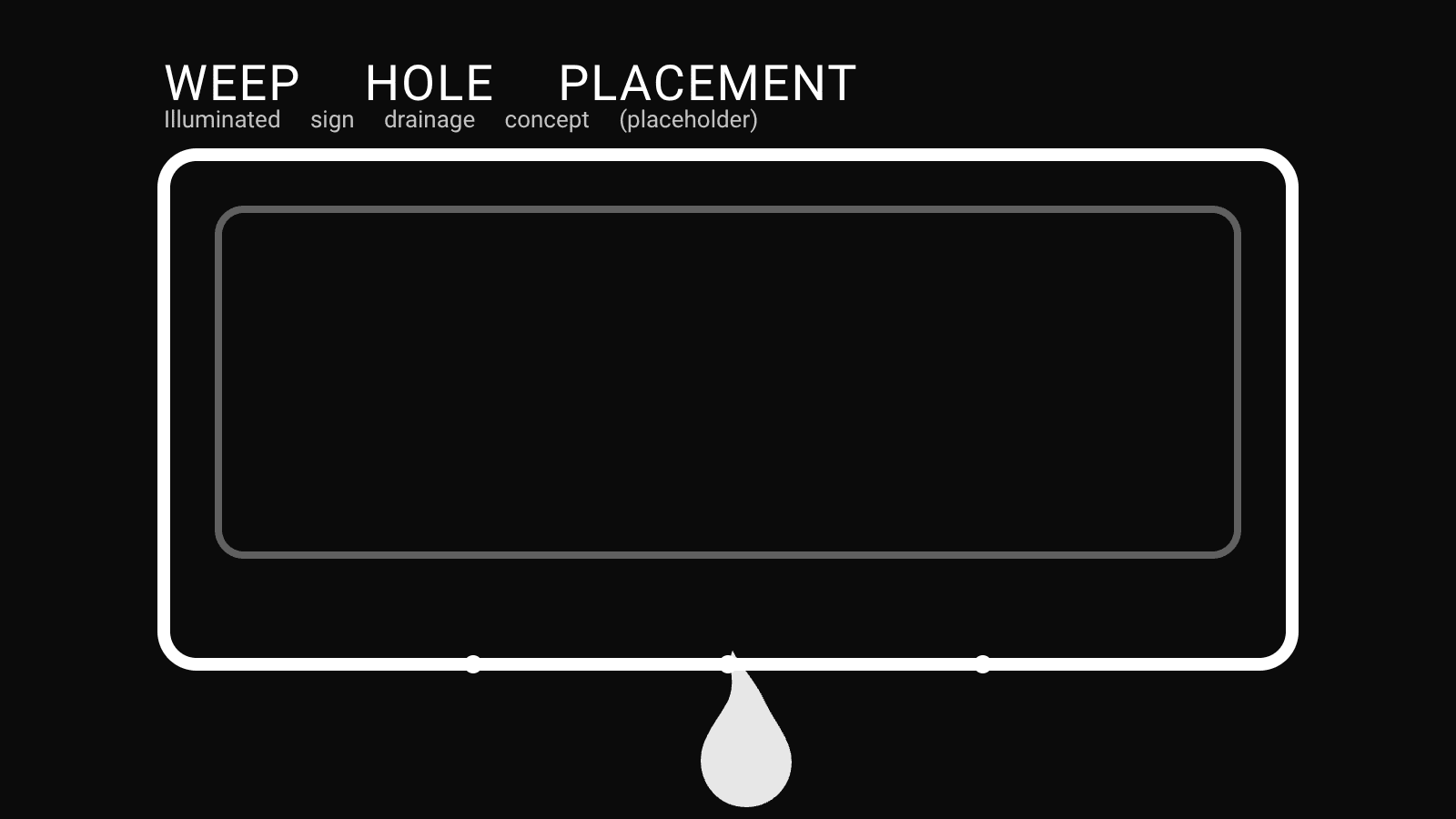
Weep holes are small drainage openings in illuminated sign cabinets. They let trapped moisture escape before it can corrode components, stain acrylic faces, leave mineral streaks, or create electrical problems.
For San Jose businesses, moisture management is not just a coastal issue. Storefront signs along corridors like Stevens Creek, The Alameda, North First Street, El Camino Real, and neighborhood retail centers see cool mornings, hot afternoons, winter rain, irrigation overspray, and routine washdowns. Use this guide to place weep holes where they actually drain and to keep those drainage paths open after installation.
What is a weep hole in an illuminated sign?
An illuminated cabinet sign is built to handle outdoor exposure, but it is not meant to trap water forever. Temperature swings create condensation, and wind-driven rain can find its way into seams, trim caps, fastener points, or aging gaskets. Weep holes give that moisture a planned exit point so it does not sit inside the cabinet.
Drainage planning matters early, especially when a cabinet is being paired with a raceway, wall panel, or custom aluminum signs package. A clean storefront design should still leave a clear path for water to leave the sign.
Where should weep holes be placed?
Placement starts with gravity, but the final mounted position matters more than the way the cabinet sits on a workbench. Code language varies by jurisdiction, and some published sign ordinances specify drainage opening ranges, such as weep holes between 3/8" and 1" in diameter for outdoor illuminated signs. In practice, reliable drainage usually comes down to a few shop-floor checks:
- Put weep holes at the true low points of the installed cabinet, usually along the bottom edge.
- Use multiple drainage points on wide cabinets so water does not get trapped at one end or behind a divider.
- Keep the path clear of wiring channels, LED modules, power supplies, interior braces, and heavy sealant.
- Confirm water can exit freely instead of draining into a wall, raceway, mounting surface, or trim detail that blocks the opening.
How big should weep holes be?
There is no one-size-fits-all diameter. Holes should be small and discreet enough to preserve the finished look, but large enough to drain without clogging from dust, pollen, sealant residue, or insect debris. If you are working from a cabinet design or manufacturer drawing, follow it. If you are retrofitting an existing sign in San Jose, Santa Clara, Sunnyvale, Mountain View, Cupertino, Milpitas, Fremont, or Palo Alto, have a sign professional confirm the safest location before drilling.
Why moisture control matters for UL-listed signs
Cabinet signs contain LED boards, power supplies, and low-voltage wiring behind a translucent face. UL-listed electric signs undergo temperature cycling, moisture tests, and overload simulations as finished units, but that does not mean a cabinet can ignore drainage for the rest of its life. Blocked weep holes, field modifications, or trapped water behind a raceway can still create moisture-related problems.
Common installation mistakes to avoid
- Drilling before checking slope: A cabinet that looks level in the shop may pitch slightly once mounted on an older fascia.
- Too few openings: One hole often is not enough on longer cabinets or raceway-mounted signs.
- Blocked exits: Mounting hardware, trim, wall sealant, or landlord-required finish work can unintentionally cap the drainage path.
- Painted over: Overspray, facade repainting, and heavy coatings can close the opening after the sign is already working.
- No service access: A weep hole is less useful if nobody can inspect it safely during maintenance.
Maintenance checks for San Jose-area weather
Weep holes only help if they stay open. In the South Bay and nearby Peninsula cities, dust, pollen, tree debris, and winter storms can all affect small drainage openings. A quick seasonal check can prevent larger sign repairs:
- Inspect before the first major rains and again after strong winter storms.
- Clear grime, spider webs, leaf debris, and buildup along the bottom edge of the cabinet.
- Recheck openings after facade painting, tenant improvements, or sign face replacement.
- Look for warning signs: recurring fogging inside the face, rust staining, flickering, or water marks inside the cabinet.
For a deeper look at keeping LED modules performing well over time, see our guide on LED module spacing calculations.
When to call a pro
If you suspect standing water inside an energized sign, do not treat it like a DIY project. Turn the sign off at the breaker and contact a qualified sign professional, especially if the sign is wall-mounted over a sidewalk, parking lot, or customer entrance.
If you are planning a new illuminated sign or need help troubleshooting moisture on a storefront in San Jose or nearby cities, see our installation page or start a project.